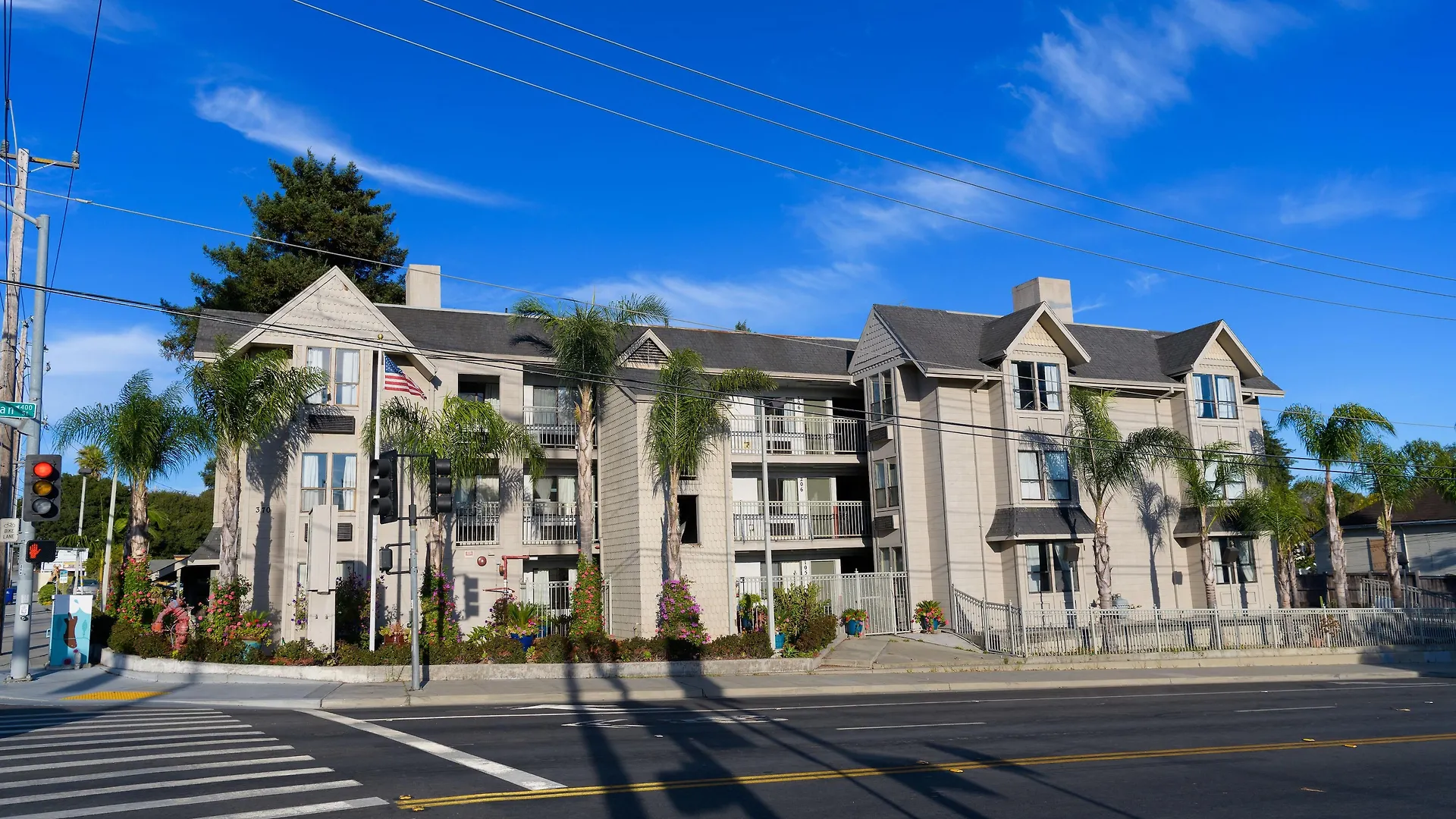
Monterey Bay stretches across one of California's most visited coastal corridors, connecting Santa Cruz in the north to Carmel-by-the-Sea in the south - and finding a cheap hotel here without sacrificing location takes real strategy. This guide breaks down 6 budget and value-focused hotels across the bay, covering where they sit, what they actually offer, and which traveler profile each one suits best.
What It's Like Staying in Monterey Bay
Monterey Bay is not a single city - it's a coastal arc spanning over 100 miles, with distinct towns like Santa Cruz, Monterey, Pacific Grove, Marina, Salinas, and Watsonville each offering a different base for exploration. Highway 1 is the main artery, and most attractions - from the Monterey Bay Aquarium to the Santa Cruz Beach Boardwalk - are accessible by car in under 45 minutes from anywhere along the bay. Crowds peak hard in summer, particularly July through August, when beachfront zones fill quickly and accommodation rates spike significantly.
Budget travelers benefit most from staying slightly inland or in smaller towns like Marina or Watsonville, where prices stay lower while still allowing day trips to Cannery Row, Pebble Beach, and Big Sur. Public transit is limited, so renting a car is essentially required for anyone staying outside downtown Monterey or Santa Cruz.
Pros:
- Wide geographic spread means you can choose a base that fits your itinerary - north for Santa Cruz, south for Monterey Peninsula
- Free parking is standard at most budget hotels along the bay, cutting daily costs significantly
- Proximity to multiple major attractions (aquarium, boardwalk, Pebble Beach) within a single drive corridor
Cons:
- No meaningful public transit network - a car is mandatory for most budget hotel locations
- Summer weekends push even budget rates up sharply, especially within 2 miles of the coast
- Fog and wind are persistent along the waterfront, particularly in Pacific Grove and Santa Cruz, even in peak season
Why Choose Budget Hotels in Monterey Bay
Budget hotels along Monterey Bay typically run well below the area's luxury resort average, which can exceed $400 per night in peak season - making value-focused properties a practical choice for travelers who prioritize time outdoors over in-room amenities. Most cheap hotels here offer the essentials: free parking, free WiFi, and basic continental breakfast, which meaningfully offsets daily costs. Room sizes are generally functional rather than spacious, with standard motel-style layouts that suit couples or solo travelers but may feel tight for families of four or more without booking multi-room units.
The trade-off is atmosphere - budget properties in this region tend to be highway-adjacent motels or older mid-century buildings rather than boutique coastal inns. However, their proximity to beach access and major attractions is often competitive with properties charging around 60% more per night, making them strong value plays for activity-focused travelers.
Pros:
- Free parking included at nearly all budget options - a real saving in towns like Santa Cruz and Monterey where paid lots are common
- Several properties offer free breakfast, reducing daily food spend by a meaningful amount
- Multi-room or larger unit options available at select properties, making group travel more cost-effective
Cons:
- Interiors and furnishings tend to reflect the price point - functional but dated in many cases
- Highway-facing rooms can have road noise, particularly on Highway 1 and Highway 101 corridors
- Limited on-site dining or lifestyle amenities - most budget hotels here are sleep-and-go bases
Practical Booking & Area Strategy for Monterey Bay
Positioning matters enormously across Monterey Bay's long coastline. Staying in Marina or Watsonville gives access to both the Monterey Peninsula and Santa Cruz without the premium of staying in either city center - Watsonville sits almost exactly between the two, roughly 30 minutes from Cannery Row and 20 minutes from the Santa Cruz Boardwalk. Salinas, just inland off Highway 101, is the most affordable base in the region and works well for travelers prioritizing the National Steinbeck Center, Mazda Raceway Laguna Seca, or the Monterey Bay Aquarium via a short highway drive.
Pacific Grove offers a quieter, residential feel compared to busy Monterey city, with walking access to Asilomar State Beach and Point Pinos Lighthouse - it suits travelers who want atmosphere over nightlife. Book at least 6 weeks ahead for summer stays, especially July 4th weekend and Labor Day, when budget rooms along the bay sell out across all towns. Whale watching season (December through April) brings a quieter crowd and lower rates, making it the smartest window for value-focused travelers.
Top things to do include the Monterey Bay Aquarium, 17-Mile Drive, Point Lobos State Reserve, the Santa Cruz Beach Boardwalk, Cannery Row, and kayaking in Elkhorn Slough - most of which require a car from any budget hotel base.
Best Value Stays
These properties offer the strongest price-to-location ratio across the Monterey Bay corridor, each positioned near key access routes with practical amenities that reduce your daily spend on the road.
-
1. Old Marina Inn
Show on map


 Check-infrom 15:00 until 23:00Check-outuntil 11:00
Just a few rooms left at the best rate!
fromUS$ 89
-
2. Motel Santa Cruz
Show on map


 Check-infrom 15:00 until 23:59Check-outuntil 11:00
Just a few rooms left at the best rate!
fromUS$ 65
-
3. Howard Johnson By Wyndham Salinas
Show on map


 Check-infrom 15:00 until 23:59Check-outuntil 11:00
Hurry – almost gone at this price!
fromUS$ 115
-
4. Comfort Inn Watsonville
Show on map


 Check-infrom 15:00 until 14:30Check-outuntil 11:00
Hurry – almost gone at this price!
fromUS$ 102
Best Premium Budget Picks
These two properties offer slightly elevated amenities or standout locations within the budget tier - worth the modest price step up for travelers who want more from their base.
-
5. Country Inn & Suites By Radisson, Monterey Beachfront-Marina, Ca
Show on map


 Check-infrom 15:00 until 23:59Check-outuntil 11:00
Rooms filling fast – secure the best rate!
fromUS$ 108
-
2. The Olympia Lodge
Show on map


 Check-infrom 16:00 until 18:00Check-outuntil 11:00
Rooms filling fast – secure the best rate!
fromUS$ 139
Smart Travel & Timing Advice for Monterey Bay
The Monterey Bay region runs on a hard seasonal curve. July and August are peak months across every town - rates at budget hotels climb sharply and availability in well-located properties drops fast, particularly for weekends. The shoulder seasons of May-June and September-October offer the best balance: weather along the coast is stable, summer crowds have thinned, and budget hotel rates can be noticeably lower than peak. Winter (December through March) is the quietest period and corresponds with prime whale watching season, when gray and humpback whales move through the bay in large numbers - a genuine draw that doesn't require peak-season pricing.
Most visits to Monterey Bay work best at 3 to 4 nights minimum - enough to cover the aquarium, a drive down 17-Mile Drive, a morning at a Santa Cruz beach, and a coastal hike without feeling rushed. Book at least 6 weeks ahead for any summer weekend stay; last-minute summer bookings in Pacific Grove or Santa Cruz are increasingly difficult at budget rates. For Salinas and Watsonville, last-minute availability is more realistic outside of major race weekends at Laguna Seca.